Going to a Concert Alone: The Complete Guide for Solo Concert-Goers
ConcertBuddy • March 13, 2026
10 min read
You want to see your favourite band live, but no one else can make it. Going to a concert alone often feels like a bigger decision than it really is. This guide goes deep into what the experience is actually like, why solo concert-going is far more common than people think, and how to approach it in a way that feels natural, grounded, and fully worth it.
Going to a Concert Alone: What You Actually Need to Know
They're finally touring. The date works. The venue is right. And somehow, the group chat falls apart — people are busy, schedules don't align, or the music just isn't high enough on anyone else's priority list. Going to a concert alone starts to feel like a bigger decision than it needs to be. This guide covers what the experience of attending a concert alone is actually like, why solo concert-going is far more common than people assume, and everything you need to know to make the night work — whether it's your first time or your tenth.
How Common Is Going to a Concert Alone?
Solo concert-going is quietly normal. It just doesn't announce itself. Depending on the genre, city, and venue size, roughly one in five attendees are there on their own. At niche shows or midweek events, that number is even higher. You rarely notice other solo concert-goers because they blend in naturally. They move through the space without needing to coordinate, wait, or regroup. And once the lights go down, the distinction disappears entirely. Most people dramatically overestimate how unusual it is to attend a concert alone, simply because no one talks about it.
What Going to a Concert Alone Is Actually Like
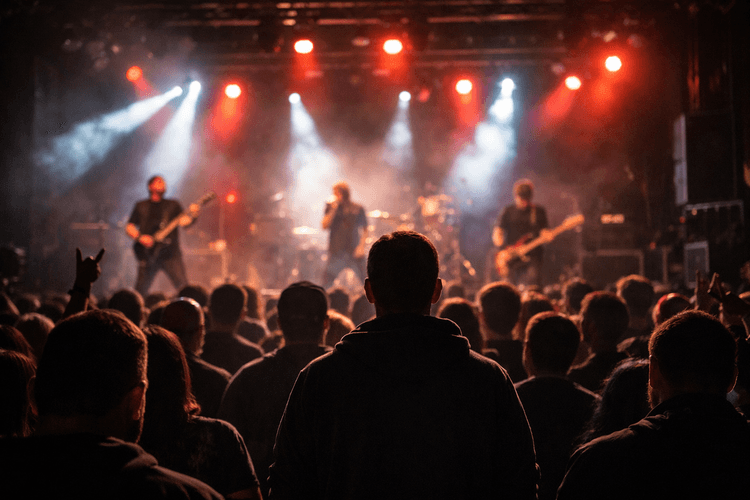
The experience tends to follow a predictable arc. Arriving alone can feel briefly noticeable — especially while waiting for doors to open or standing between sets. That moment of self-awareness is real, but it's short-lived. The shift usually happens within the first song. Once the lights drop and the room locks onto the stage, your attention moves outward. The crowd becomes anonymous, the noise becomes immersive, and the fact that you arrived alone stops being relevant. From that point on, attending a concert alone is almost identical to going with others — except with fewer distractions. You're simply present.
The Real Benefits of Going to a Concert Alone
Going to a concert alone removes a surprising amount of mental overhead. There's no negotiating where to stand, when to grab a drink, or whether to leave early or stay late. The night becomes linear: you arrive, you listen, you leave on your own terms. For many people, that simplicity is unexpectedly satisfying. You stand exactly where you want. You move when it feels right. You leave with the last note still ringing, without having to regroup or debrief. Once you experience it, it often reframes how you think about live music entirely.
Practical Tips for Attending a Concert Alone
A few small choices make the night flow more smoothly when going to a concert alone. Arriving closer to showtime reduces the waiting-alone window. Standing near the edges or by the sound desk offers good sightlines, comfortable space, and a more relaxed crowd. Keeping the evening unplanned reduces pressure. Most importantly, there's no need to perform being alone. You don't have to look busy, confident, or intentional. Being there is enough. The concert carries the experience on its own.
Meeting People at Concerts When You're Alone (Optional, Not the Point)
Brief conversations happen naturally sometimes. A comment about the venue, a shared reaction between songs, or a simple question about the support act can open a short exchange. These moments are low-stakes — most stay brief, some turn into standing next to each other for a set, and many end without any formal goodbye. Importantly, these interactions don't change the structure of the night. You don't owe anyone your time, and you don't need to convert a conversation into company. The music carries the evening regardless.
Safety and Comfort Tips for Solo Concert-Goers
Going to a concert alone doesn't mean giving anything up in terms of safety. Stick to public areas, keep control over when you arrive and leave, and trust your instincts. If something feels off, you're free to move on. Maintaining clear boundaries is part of what makes the experience comfortable — independence is an asset here.
The Concert Is the Point
In hindsight, most people don't frame going to a concert alone as a bold decision. They frame it as practical. They went, they heard the music live, and the night worked. That's usually enough to reset the hesitation next time. And more often than not, people end up wondering why they ever considered skipping the show in the first place.
How to Prepare Before Going to a Concert Alone
A little preparation goes a long way when attending a concert alone. Know your transport both ways before you leave. Check the venue layout in advance — whether it's standing or seated, where the entrances are, and where the quieter spots tend to be. Arrive with your ticket ready to avoid fussing at the gate. Check who the support act is — it gives you something to look forward to and something to talk about with people around you.
What to Wear and Bring to a Solo Concert
Wear comfortable shoes — standing for two to three hours is standard. Bring high-fidelity earplugs, which reduce volume without muffling sound and make a real difference to how you feel the next day. Keep your bag small or go bagless entirely. Charge your phone beforehand — a dead phone mid-show is frustrating when you're on your own.
Going to a Concert Alone by Venue Type
Small clubs are arguably the best solo concert experience — intimate, fluid, and completely unremarkable to attend alone. Large arenas feel more anonymous once you're inside, and seated tickets are particularly comfortable when attending a concert solo. Festivals are uniquely well-suited to going alone because the format is self-directed — you move between stages on your own schedule, follow whatever interests you, and nobody is watching to see whether you arrived alone.
Going to a Concert Alone by Genre
Rock and metal audiences are relaxed about solo attendance, and the shared intensity creates an immediate bond with those around you. Electronic and club nights are some of the most solo-friendly environments in live music — the culture is open and the focus is entirely on the music. Jazz clubs have a long tradition of individual attendance and take solo listening seriously. Large pop shows are designed to be spectacular, and that works just as well — often better — when you're fully focused on the performance.
What If You'd Rather Not Go to a Concert Alone?
Going alone is a perfectly valid choice — but it's not the only one. Platforms like ConcertBuddy let you browse music fans in your city, filter by genre and location, and connect with people who want to attend the same shows. Artist fan communities on Reddit and Discord usually have threads specifically for finding show companions. Local music Facebook groups are also worth posting in — a straightforward message about the show you're attending tends to get responses.
Going to a Concert Alone as a Woman
Standing near the sound desk or on the sides of the venue tends to attract a calmer, more music-focused crowd and is generally a more comfortable position when attending a concert alone. Venue staff are easy to identify and most venues have clear policies on handling unwanted behaviour. Most importantly — trust your read of the room. Being solo means you have no one else's schedule to consider, so relocating is always an option.
Frequently Asked Questions About Going to a Concert Alone
Is it weird to go to a concert alone? No — roughly one in five concert attendees are there on their own, and at niche shows the number is even higher. Solo concert-going is common; it just doesn't announce itself. Where should I stand when going to a concert alone? Near the sound desk or on the sides of the venue — good sightlines, comfortable personal space, and a relaxed crowd. It's also easy to move if you want to. Can you go to a festival alone? Absolutely — festivals are particularly well-suited to solo attendance because the format is fluid and self-directed. You move between stages on your own schedule and nobody tracks whether you arrived alone. How do I find someone to go to a concert with? Platforms like ConcertBuddy connect you with music fans in your city who share your taste. Artist subreddits and Discord servers often have threads for finding show companions, and local music Facebook groups are worth posting in. What should I bring to a concert alone? Comfortable shoes, high-fidelity earplugs, a small bag, and a fully charged phone.