Rome Live Music Guide: The Best Venues
ConcertBuddy Team • 2026-09-26
11 min read
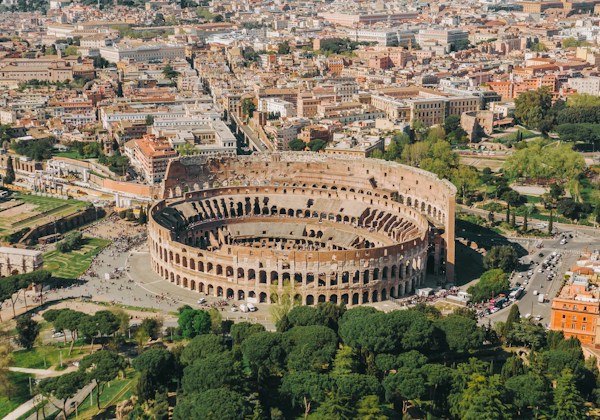
Rome's live music scene is scattered, sprawling, and deeply rewarding. From the world-class concert halls of Flaminio to the underground venues of Pigneto, the historic Piper Club, and the repurposed cinemas of Trastevere — this guide maps the venues that give Rome's nightlife its distinct character.
Find other music fans heading to Rome shows on ConcertBuddy.
Auditorium Parco della Musica — Viale Pietro de Coubertin, 30, Flaminio

Designed by Renzo Piano and opened in 2002, the Auditorium Parco della Musica is one of the most extraordinary concert complexes in the world. Three concert halls — the 700-seat Sala Petrassi, the 1,200-seat Sala Sinopoli, and the 2,800-seat Sala Santa Cecilia — sit around an open-air amphitheatre seating 3,000. The facility is home to the Accademia Nazionale di Santa Cecilia and hosts everything from orchestral concerts and jazz festivals to pop and rock shows. No other venue in Rome offers the same range of quality.
Official website →Big Bang Club — Via Ottorino Respighi, 3, Flaminio

Big Bang Club is a key mid-size venue in the Flaminio district, booking international indie, rock, and alternative acts for crowds of up to 600. The venue sits conveniently close to the Auditorium and has benefited from the cultural hub that has grown around Renzo Piano's complex. The programming is quality-focused, with a consistent track record of bringing through artists at the inflection point between small-room cult status and large-venue mainstream. The sound system has been repeatedly upgraded and the acoustics are among the best in the city.
Official website →Circolo degli Artisti — Via Casilina Vecchia, 42, Pigneto

Circolo degli Artisti was for many years the beating heart of Rome's alternative scene. Located in the Pigneto neighbourhood — itself a byword for Rome's underground cultural life — the venue combines an indoor concert space with one of the city's finest outdoor stages, both active in summer. Post-punk, electronic, world music, and indie rock all appear regularly. The complex also hosts art exhibitions, film screenings, and club nights, making it a genuine cultural centre rather than simply a music venue. It remains essential to any understanding of what Rome's independent scene looks like.
Official website →Forte Fanfulla — Via Fanfulla da Lodi, 15, Pigneto

Forte Fanfulla is a DIY social centre and music venue in Pigneto with a fierce commitment to punk, hardcore, and experimental music. The 300-capacity room is unadorned and deliberately unglamorous — the focus is entirely on the music and the community that surrounds it. International underground acts touring Europe regularly stop here, and the venue has a reputation for booking artists years before they achieve wider recognition. The social centre ethos means the space is also used for community events, political meetings, and film screenings alongside the gig programme.
Official website →Monk — Via Giuseppe Mirri, 35, Quadraro

Monk is a creative complex in the Quadraro neighbourhood that combines a 400-capacity concert hall with an art gallery, independent cinema, and bar. The programming covers indie rock, electronic, jazz, and experimental music, with an emphasis on supporting emerging Italian artists alongside international bookings. The venue's multi-disciplinary nature means the audience is often drawn from Rome's broader arts community, creating a more mixed and curious crowd than at more single-genre venues. The outdoor terrace is a draw in summer.
Official website →Init Club — Via della Stazione di Grottaferrata, 8, Garbatella

Init Club is one of Rome's most important indie venues, a 400-capacity space in the Garbatella neighbourhood with a booking policy that mixes Italian and international alternative acts. The venue has a strong reputation for quality over quantity — shows here tend to sell out and the audience is engaged rather than passive. Indie rock, post-punk, and electronic acts all feature in the programme, and the venue has an informal, community-focused atmosphere that sets it apart from more commercial competitors.
Official website →Wishlist Club — Via Contardo Ferrini, 15, Tuscolano

Wishlist Club is a 400-capacity venue in the Tuscolano district focused on indie, alternative, and rock music. The club operates as a membership-based social centre (as many of Rome's independent venues do) and has built a loyal following over many years of consistent programming. The booking policy is eclectic but quality-focused, and the venue has a well-earned reputation for sound quality in a city where not all smaller rooms take acoustics seriously. One of the more reliable options for mid-week shows in Rome.
Official website →Atlantico Live — Via dell'Oceano Atlantico, 271D, EUR

Atlantico Live in the EUR district is Rome's largest dedicated live music venue, with capacity for up to 3,500. It books the bigger international touring acts — electronic, urban, pop, and occasional rock — who sit above the mid-size room circuit but below arena scale. The venue is architecturally straightforward but functionally effective; the production team handles large-scale shows professionally and the location in the EUR's wide boulevards means there is no street-level congestion. Getting there requires a metro ride, but for big shows it is the right venue.
Official website →Alcazar Live — Via Cardinale Merry del Val, 14, Trastevere

Alcazar Live occupies a converted early 20th-century cinema in the heart of Trastevere, one of Rome's most atmospheric and tourist-frequented neighbourhoods. The 800-capacity space retains its cinema character — the original slope of the auditorium floor creates excellent sight lines — and hosts a programme that mixes indie rock, pop, and electronic acts. Being in Trastevere means the pre-show experience is particularly good: the neighbourhood's bars and restaurants are among the best in Rome for a pre-gig meal and drink.
Official website →Traffic Live — Via Urbana, 12, Monti

Traffic Live in the Rione Monti neighbourhood is a mid-size venue of around 400 capacity, consistently booking quality rock, metal, and alternative acts. Monti is one of Rome's most characterful central neighbourhoods — medieval streets, independent shops, and a strong local identity — and Traffic Live fits naturally into this environment. The venue has good sound and a committed audience; shows here tend to be well-attended and enthusiastic. It is one of the easier central Rome venues to reach on foot from the main sights.
Official website →Largo — Via Biordo Michelotti, 2, Prati

Largo is a mid-size venue in the Prati neighbourhood that serves as one of Rome's better-known stages for indie, rock, and singer-songwriter acts. The 600-capacity space has a record shop attached (Largo Records) and the programming reflects the shop's eclectic and quality-focused taste. Italian independent artists are well-represented alongside international touring acts, and the venue has a reputation for discovering artists early. The record shop connection means the venue occasionally hosts in-store performances and listening events in addition to the main programme.
Official website →Piper Club — Via Tagliamento, 9, Trieste

Piper Club opened in 1965 and is the most historically significant venue in Rome. In the 1960s and 70s, it was the epicentre of Italian pop and beat culture, with Patty Pravo, Caterina Caselli, and visiting international acts making it one of Europe's most talked-about nightclubs. Today the venue continues to operate as a concert space and club, programming a mixture of nostalgia events and contemporary bookings across pop, electronic, and urban genres. Its 1,500-capacity makes it one of the larger dedicated live rooms in the city.
Official website →Angelo Mai Altrove — Via delle Terme di Caracalla, 55a, Celio

Angelo Mai Altrove is an independent cultural centre housed in a former industrial building near the Terme di Caracalla. The space hosts experimental music, theatre, dance, and visual arts in a deliberately non-commercial environment. Noise, free jazz, electronic, and contemporary classical music all feature in the programme, which is curated by a collective rather than a single promoter. The venue is particularly active in summer, when the outdoor courtyard becomes one of Rome's most unusual concert spaces. Essential for adventurous listeners.
Official website →Rome's Live Music Scene: Where to Start
From Renzo Piano's Auditorium to the DIY social centres of Pigneto, from the converted cinema of Alcazar in Trastevere to the historic Piper Club on Via Tagliamento — Rome's live music landscape rewards exploration. The city's venues are scattered across its many distinct neighbourhoods, and discovering them is part of the pleasure. Use ConcertBuddy to find other fans at the same shows and make the most of Rome's musical life.
Find Your Gig Companion with ConcertBuddy
Heading to Auditorium Parco della Musica, Circolo degli Artisti, Alcazar Live, or any Rome show? ConcertBuddy connects you with other fans attending the same event — find a gig buddy, a group to explore Pigneto with, or simply know there are like-minded people at the show. Post your event, browse who else is going, and turn a Rome night out into a shared experience.